The Mona Lisa Foundation

Did Leonardo have a Hidden Technique?


The Mona Lisa Foundation performed a graphic experiment, comparing the Earlier and Louvre Mona Lisas, and believes it has shown Leonardo’s unique and extraordinary mastery of proportion in both portraits, and has demonstrated the importance of geometry in his two compositions.

Unlocking a Mystery – Part I

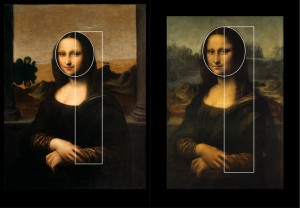
The first combination of images places the two paintings side-by-side, scaled to their relative sizes. It is clear that the figure in the ‘Earlier Version’ is smaller than that of her counterpart in the Louvre, even though the actual size of the earlier painting as a whole is larger. In addition, the figure in the ‘Louvre Version’ occupies a larger proportion of its surface area.


Unlocking a Mystery – Part II

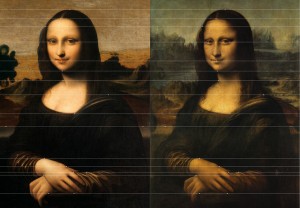
The second combination of images again displays the two portraits scaled to their relative sizes. The simple graphic illustrations demonstrate that the figure in the ‘Louvre Version’ is approximately 10% larger than the figure in the ‘Earlier Version’.


Unlocking a Mystery – Part III

Here, the comparison of images shows the similarities in the heads of both Mona Lisas. In reality, the true scale of the figure in the ‘Louvre Version’ (on the right) is larger. In consideration of so many unique elements inherent with variations in both, it is clear that neither painting could be a ‘copy’ of the other.


Unlocking a Mystery – Part IV

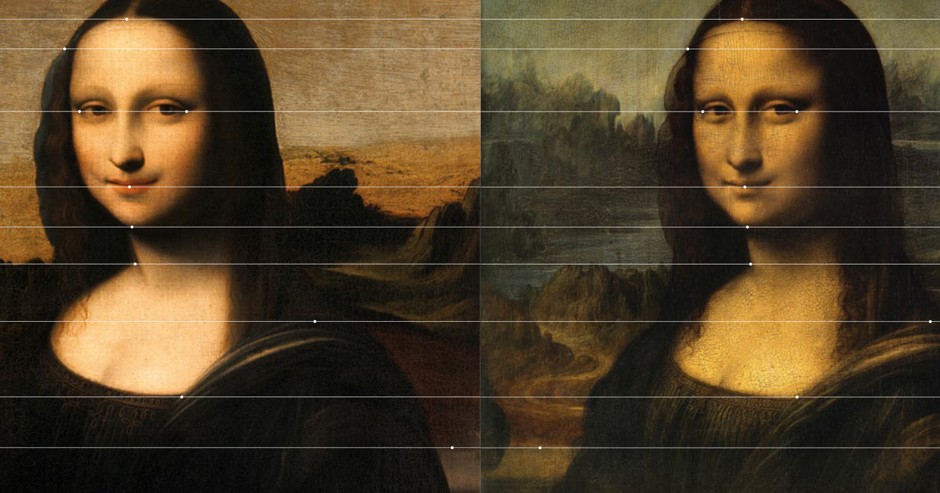
The final combination of images demonstrates the mathematical precision with which Leonardo constructed both figures, and how he accurately set both compositions within the same parameters. Even though they are obviously different paintings, the features of both subjects are in exactly the same positions and perfectly aligned.

What makes this comparison so remarkable is that the two portraits reveal such exact proportional similarities despite the fact that, in reality, the figures within them were not painted to the same size. They are dramatically different compositions, and the technique of proportion and related geometric measurements employed, points to the two portraits having been painted by the same artist; someone intimately familiar with both, and who had the intention to create two different paintings of the same subject.